english below and in green!
Vor ein paar Tagen habe ich hier in Köln eine Lesung mit Texten von Andy Warhol gemacht. Die Veranstaltung fand statt im Rahmen der Ausstellung mit LP-Covers, von denen Andy Warhol unzählige gestaltet hat und die zur Zeit im Museum für Angewandte Kunst in Köln zu sehen sind. Textgrundlage waren Ausschnitte aus einem Buch mit dem Titel: "Die Philosophie des Andy Warhol von A bis B und zurück" (Ffm 2006). Das ist eine Zusammenstellung von Schriften des Künstlers zu verschiedenen Themen. Ich habe mich auf zwei Themen konzentriert: Arbeit und Unterhosen.
Auf den Teil mit den Unterhosen habe ich mich dadurch vorbereitet, dass ich vor der Lesung selbst Unterhosen kaufen gegangen bin. Warhol behauptet, die Tätigkeit des Unterhosenkaufens zeige sehr viele Aspekte der Persönlichkeit des Kaufenden. Da hat er sicher recht. Die Marke, die Warhol bevorzugt hat, gibt es übrigens immer noch und auch Unterhosen mit "Pima-Baumwolle", auf die sein snobistischer Freund schwört, kann man noch kaufen.
Für unsere Fragen auf diesem Blog ist das andere Thema, die Arbeit, ein wenig ergiebiger. Warhol bietet natürlich keine kritische Analyse seines oder des allgemeinen Arbeitsbegriffes. Er denkt überhaupt nicht kritisch oder analytisch, sondern durchgehend affirmativ. Das hat einen bestimmten Reiz, denn dadurch entgeht er der Gefahr, die Dinge durch eine wie auch immer gefärbte ideologische Brille zu betrachten. Seine Texte sind in keiner Weise antikapitalistisch und doch sind sie subversiv. Denn obwohl er hervorhebt, wie wichtig ihm das "Business" ist, zeigt sich beim näheren Hinsehen, dass er das Business nutzt, um die Kunst in die Welt zu bringen. Ihm ging es darum, dass nicht nur die Kunstwelt seine Arbeiten wahrnimmt und womöglich schätzt, sondern dass sie in der "Welt da draußen" rezipiert wird. Er freute sich, dass seine "Kunst nun im Kommerz mitschwamm - mitten ins wirkliche Leben hinein" (Warhol S. 87). Und die Mittel, die er dazu einsetzt, biedern sich nicht an den sogenannten Massengeschmack an, sondern sie prägen diesen Geschmack.
Seine Filme, mit denen er offenbar die Factory finanziell lange über Wasser hielt, sind alles andere als mainstreamnahe.
Sein Verhältnis zur Arbeit ist nicht vom kapitalistischen Leistungsdenken geformt. "Ich glaube, dass ich Arbeit schon deshalb sehr locker interpretiere, weil ich der Meinung bin, dass allein der Umstand, dass man lebt, viel Arbeit mit sich bringt, viel Arbeit, die man eigentlich gar nicht machen will. Geboren sein ist gerad so wie entführt werden. Und als Sklave verkauft werden (...)." (Warhol S. 91f.)
Sein Verhältnis zur Arbeit ist ganz und gar pragmatisch. Wenn sie nötig ist, wird sie auch getan, aber sie hat keinen darüber hinaus gehenden Eigenwert. Warhol nutzt also auch hier die Mittel, die die kapitalistische Welt ihm bietet, um damit seine eigenen Vorhaben umzusetzen. Aber er käme nie auf die Idee, der Arbeit einen Wert für seine Definition als Mensch und Künstler zuzugestehen. Damit fällt er nicht auf die sonst übliche völlige Überbewertung der Arbeit für den Menschen und die Welt herein, die schon Max Scheler im Geist des Kapitalismus am Werk gesehen und kritisiert hat.
Some days ago I did a reading with texts of Andy Warhol. This event took place in the context of an exhibition with record-covers that Warhol designed and which are shown in the Museum of Applied Arts in Köln. I read parts of a book with a collection of his writings: "The philosophy of Andy Warhol from A to B and back". I don´t know if this book exists in english as well. Anyway I focused on two issues that he writes about: Work and Underwear.
To prepare for the part about underwear I went shopping some underpants for myself just before the reading started. Warhol claims that shopping underwear is an act that shows quite a lot about the personality of people. I agree. I realized that the brand that Warhol preferred still exists as well as pants with "Pima-cotton" that his snobby friend use to wear.
For the questions we are dealing with on this blog the other subject - work - is a bit more interesting. Warhol of course doesn´t give a critical analysis of work. He doesn´t think in terms of analysis or critique but nearly always affirmative. This has a certain appeal, because doing so he he avoids the risk to fall into the traps of ideology. His texts are not at all anticapitalistic but they are subversive! Although he points out how important business is for him you can see in a closer view that he uses business just to bring his art into the world. He wanted his work seen and known not only in the close circle of the artists scene but "out there" in the world. He was glad that his art "was swimming with the commercial realm - right into real life!". He doesn´t serve mainstream taste to be successful, but he forms it.
Warhol´s relation to work isn´t formed by the capitalistic thinking of performance. " I believe that I take work so easy because I think that the mere fact of living brings a lot of work already, work that you don´t want to do. Being born is like being kidnapped. And sold as a slave." (translation from german)
He has a pragmatic relation to work. If it is necessary he does it. Warhol here like always uses the means that the capitalistic world offers to realize his ideas but apart from this work has no meaning or better: no value for the fundamental understanding of human beings. In difference to the spirit of capitalism (as Scheler has described it) Warhol would never agree to the overestimation that work normally has in our world. This is a form of artistic subversion that we can see in Warhol´s writings.
Sonntag, 11. November 2018

Montag, 24. September 2018
Artists and workers
Today I would like to talk about some theses that I heard in a short lecture given by Vibbek Chibber, one of the leading figures in the US for anticapitalist thinking. I want to find out if there is anything relevant in his thoughts for my/our question of the relation of artists to capitalism.
Chibber´s most important book is as far as I can see: Postcolonial Theory and the Specter of Capital. Strangely enough not yet translated into german.
The lecture that I saw on youtube is about "Why do socialist talk so much about workers?", it was held in March 2017 in a bookshop in NYC.
The title of this lecture is a fair question and Chibber argues that there are very good reasons for socialists to talk about workers and the working class. For me it is always a bit odd to see a bunch of intellectuals (like myself) sitting in a bookshop and talk about the working class without having any examples of this "species" around. But I am aware that this is more an aesthetic than a political remark...
Chibbers starts to claim that there are two main issues that have to be available to human beings to give them some social justice. The first one is that they need certain material goods to survive in a manner outside of the mode of desperation: enough to eat, housing, clothing etc. and (I add) some means to join the social life of their societies. I of course agree with this point and artists know often very well how the struggle of surviving on a financial level can become an obstacle for the artistic work. The poor artist who finds inspiration in his/her suffering is only a romantic ideal - most artists have enough sources for suffering without the danger of starvation or not being able to pay the rent.
As the second aspect that is necessary for social justice Chibbers lists autonomy or freedom of domination.
This seems to me much more difficult than the first one. I immediately agree that autonomy is crucial for myself and I guess it is so for most artists - and for everybody who was present in this bookshop in New York City for the lecture. But would everybody else agree with this statement? Do people really think that the freedom of domination will be a condition for social justice? There is a lot to discuss and I come back to this point later.
Chibbers argues that Capitalism is a system that systematically deprives people of both of these goods: basic material goods and autonomy. And the group of people who is the most in danger of being deprived of these goods is the working class.
This sounds like an argument that could have been heard also in the late sixties or in the early twenties of last century in Europe or the US. It is not wrong. But there are so much "Buts" around it that I doubt if the overcoming of capitalism is going to happen if we follow this path (having also in mind how often this path had failed already....). I am not going to explore all these "Buts", but (!) I am focusing on one issue:
Chibbers ignores here that the rise of the idea of autonomy (a very modern concept!) went hand in hand with the rise of capitalism, both starting in the Renaissance and being strongly present in European societies since the 17th or 18th century. This is not by accident. Capitalism needs a type of personality that has a certain degree of autonomy because only autonomous people are willing and able to take risks. And taking risks is (or at least has been) one of the main conditions to be an entrepreneur. The other main type of person that is needed by capitalism is the "Bourgeois" and he or she doesn´t need or want autonomy but safety. He or she doesn´t need to make own decisions as long as he/she can live according to the traditions and values of the social framework in which they were put in.
(If you have read more of this blog you will recognize some thoughts from Max Scheler here.)
Capitalism cannot afford to oppress all sorts of autonomy for everybody because it is needed as a source for progress. We are not hitting the crucial point in claiming that everybody wants or needs autonomy and that Capitalism is oppressing exactly this need. Things are more complex and reducing the struggle against Capitalism to the old fight of the working class is not enough. It is time to see the wider picture.
My point is: As long as socialism focuses only of the working class as the group of people who do not get the autonomy and the basic needs that they should have, the best result they will come to is a better social and financial situation for the workers. Nothing wrong with this. But if we want to overcome Capitalism as the ruling ideology worldwide we have to start somewhere else.
My proposal: Let´s start with ourselves! Let´s start as artists, as intellectuals, as writers, students etc. and find out how and where the Spirit of Capitalism is working against our wishes, values and ideas and how Capitalism deprives us of our dignity as human beings. And then let´s try to step out of the logic of Capitalism.
Max Scheler wrote already in 1914 that the artists have to play an important role in the process of overcoming Capitalism. Maybe the time is now to take this idea serious?
Chibber´s most important book is as far as I can see: Postcolonial Theory and the Specter of Capital. Strangely enough not yet translated into german.
The lecture that I saw on youtube is about "Why do socialist talk so much about workers?", it was held in March 2017 in a bookshop in NYC.
The title of this lecture is a fair question and Chibber argues that there are very good reasons for socialists to talk about workers and the working class. For me it is always a bit odd to see a bunch of intellectuals (like myself) sitting in a bookshop and talk about the working class without having any examples of this "species" around. But I am aware that this is more an aesthetic than a political remark...
Chibbers starts to claim that there are two main issues that have to be available to human beings to give them some social justice. The first one is that they need certain material goods to survive in a manner outside of the mode of desperation: enough to eat, housing, clothing etc. and (I add) some means to join the social life of their societies. I of course agree with this point and artists know often very well how the struggle of surviving on a financial level can become an obstacle for the artistic work. The poor artist who finds inspiration in his/her suffering is only a romantic ideal - most artists have enough sources for suffering without the danger of starvation or not being able to pay the rent.
As the second aspect that is necessary for social justice Chibbers lists autonomy or freedom of domination.
This seems to me much more difficult than the first one. I immediately agree that autonomy is crucial for myself and I guess it is so for most artists - and for everybody who was present in this bookshop in New York City for the lecture. But would everybody else agree with this statement? Do people really think that the freedom of domination will be a condition for social justice? There is a lot to discuss and I come back to this point later.
Chibbers argues that Capitalism is a system that systematically deprives people of both of these goods: basic material goods and autonomy. And the group of people who is the most in danger of being deprived of these goods is the working class.
This sounds like an argument that could have been heard also in the late sixties or in the early twenties of last century in Europe or the US. It is not wrong. But there are so much "Buts" around it that I doubt if the overcoming of capitalism is going to happen if we follow this path (having also in mind how often this path had failed already....). I am not going to explore all these "Buts", but (!) I am focusing on one issue:
Chibbers ignores here that the rise of the idea of autonomy (a very modern concept!) went hand in hand with the rise of capitalism, both starting in the Renaissance and being strongly present in European societies since the 17th or 18th century. This is not by accident. Capitalism needs a type of personality that has a certain degree of autonomy because only autonomous people are willing and able to take risks. And taking risks is (or at least has been) one of the main conditions to be an entrepreneur. The other main type of person that is needed by capitalism is the "Bourgeois" and he or she doesn´t need or want autonomy but safety. He or she doesn´t need to make own decisions as long as he/she can live according to the traditions and values of the social framework in which they were put in.
(If you have read more of this blog you will recognize some thoughts from Max Scheler here.)
Capitalism cannot afford to oppress all sorts of autonomy for everybody because it is needed as a source for progress. We are not hitting the crucial point in claiming that everybody wants or needs autonomy and that Capitalism is oppressing exactly this need. Things are more complex and reducing the struggle against Capitalism to the old fight of the working class is not enough. It is time to see the wider picture.
My point is: As long as socialism focuses only of the working class as the group of people who do not get the autonomy and the basic needs that they should have, the best result they will come to is a better social and financial situation for the workers. Nothing wrong with this. But if we want to overcome Capitalism as the ruling ideology worldwide we have to start somewhere else.
My proposal: Let´s start with ourselves! Let´s start as artists, as intellectuals, as writers, students etc. and find out how and where the Spirit of Capitalism is working against our wishes, values and ideas and how Capitalism deprives us of our dignity as human beings. And then let´s try to step out of the logic of Capitalism.
Max Scheler wrote already in 1914 that the artists have to play an important role in the process of overcoming Capitalism. Maybe the time is now to take this idea serious?
Samstag, 26. Mai 2018
zur kapitalistischen Strategie der Vereinnahmung/ about the capitalist strategy of colonization of countermovements
english below and in green
Durch irgendwelche digitalen
Zufälle bin ich in den Verteiler der Zeitschrift ManagerSeminare geraten und bekomme sie einmal mit Jahr gratis
zugeschickt (Heft 243, Juni 2018). Die Zeitschrift wendet sich anscheinend an
Unternehmensberater, Coaches und Fortbildungsabteilungen in Unternehmen. Abgesehen
davon, dass der dort genutzte Business Talk eine schwere Herausforderung für
jeden darstellt, der sich mit den ästhetischen Aspekten von Sprache
beschäftigt, bietet die Lektüre sehr interessante Einsichten in den Geist des
Kapitalismus. Dieses Mal war in dem Heft ein Artikel zu finden, der für unsere
Fragestellung nach den Möglichkeiten von Künstlern, der kapitalistischen Logik
nicht in die Falle zu gehen, einiges an (ernüchterndem) Material liefert.
In dem Artikel mit der
Überschrift „Thesen zum Tomorrow“ (sic!) listet der Autor Harry Gatterer,
seines Zeichens Geschäftsführer eines offenbar auf die Wirtschaft
ausgerichteten „Zukunftsinstituts“, eine Reihe von 14 gesellschaftlichen und
ökonomischen Tendenzen auf, die seiner Ansicht nach die nähere Zukunft
bestimmen und von Unternehmen beachtet werden sollten. In der Liste gibt es ein
paar Überraschungen. Da werden Aspekte aufgeführt, von denen wir (?)/ einige
von uns gedacht und gehofft hatten, dass sie den Kapitalismus eher
zurückdrängen als unterstützen würden. Dieser Artikel ist ein weiteres Indiz
dafür, dass die große und fast immer unterschätzte Stärke des kapitalistischen
Geistes in seiner Fähigkeit besteht, Gegentendenzen und kleine und große
Widerstandsbewegungen zu vereinnahmen und aus ihnen Waren und Märkte zu machen.
Auf ein paar in dem Artikel genannten
Tendenzen will ich etwas genauer eingehen. Eines lautet: Achtsamkeit. Gatterer sieht in der Tendenz, Achtsamkeit ins eigene
Leben zu bringen, eine Gegenbewegung zur „permanenten Reizüberflutung, zur
medial erzeugten Aufregung und zur erzwungenen Steigerung der
Aufmerksamkeitsressourcen“. Dem kann man nur zustimmen. Er glaubt, dass
Achtsamkeit auch im „Businesskontext ein wichtiger Grundwert und eine
Arbeitstrategie“ werde.
Natürlich gibt es auch schon
längst Trainingsangebote für Achtsamkeit für Unternehmen. Und natürlich kann es
niemandem schaden, die Fähigkeit zur Achtsamkeit zu schulen. Denn, so steht es
in dem Artikel: „Sie verhilft zur Stärkung von Klarheit, Stabilität und
Kompetenz“. Mit diesem letzten kleinen Satz wird deutlich, wieso es aus einer
unternehmerischen Sicht sinnvoll erscheinen kann, Achtsamkeit als Wert in den
kapitalistischen Zusammenhang zu integrieren und sie damit zu vereinnahmen. Sie
stärkt nämlich Werte, die dem Unternehmen helfen, erfolgreicher zu sein. Man
muss sich klar machen, dass es hier um Strategien geht, Unternehmenserfolge zu
fördern. Das ist das über allem stehende Ziel des kapitalistischen Geistes. Achtsamkeit,
eine Qualität, die eigentlich aus einem im weiten Sinne religiösen Zusammenhang
stammt, wird zum Mittel der Profitsteigerung.
Ein anderes Zukunftsthema, das
der Autor Gatterer auflistet, trifft mich selbst ziemlich hart, weil es einen
Aspekt aufgreift, mit dem ich mich seit einiger Zeit künstlerisch und sozusagen
kunsthistorisch sehr beschäftige. Bei mir geht es um die Frage, wie wir
Lebensformen finden können, in denen die Gemeinschaftlichkeit von allen
Mitgliedern getragen und zugleich jedes Mitglied in seiner individuellen
Entfaltung unterstützt wird.
Der Sozialismus in seinen
realen Ausprägungen des 20. Jahrhunderts hat die Idee der gerechten
Gemeinschaft auf Kosten der individuellen Freiheit der einzelnen aufbauen
wollen und der Kapitalismus versucht(e), eine Gesellschaft des
Hyperindividualismus zu konstruieren, in der kein Platz mehr für solidarische
Strukturen benötigt wird. Aber gerade unter Künstlern gab es schon sehr früh
Initiativen, um Gemeinschaftlichkeit und Individualität zusammen zu denken und
praktisch zusammenzuführen.
Schon kurz nach dem 1.
Weltkrieg entstanden einige sehr inspirierende Versuche von KünstlerInnen, die
in diese Richtung wiesen. Einer dieser Versuche war die so genannte
Kalltalgemeinschaft, eine Gruppe von meist jungen Künstlerinnen und Künstlern,
die 1919 aus Köln nach Simonskall in der Eifel zogen, um dort gemeinsam zu
leben und ihre Kunst zu machen, und zwar Kunst, die nicht die Naturidylle
feiert, sondern gesellschaftlich relevant sein wollte.
Jetzt lese ich unter der
Begriff Wir-Kultur auf der Liste der
Zukunftstendenzen von Gatterer, dass „sich heute neue Gemeinschaftsstrategien
(entwickeln). Sie entsprechen dem Wunsch nach Individualität,
Selbstverwirklichung und Unterscheidung von der Masse und erlauben dennoch ein
Zugehörigkeitsgefühl.“ Die Notwendigkeit, neue Formen des Zusammenlebens zu
erkunden, scheint also als Tendenz schon in den kapitalistischen Gefilden
angekommen und wahrgenommen worden zu sein. Und damit taucht sofort die Gefahr
auf, dass diese Versuche, noch bevor sie die Praxisreife für die Gesellschaft
gewonnen haben, vom kapitalistischen Denken vereinnahmt und auf ihre
Marktkonformität hin gestaltet werden. Wie lässt sich das verhindern?
In der Liste der Zukunftstendenzen,
die der Autor aufzählt, finden sich zwei, die das ökonomische System des
Kapitalismus selbst betreffen. Unter dem Titel Postwachstumsökonomie schreibt Gatterer: „Die neue Wirtschaft
wächst nicht mehr, sie reift“. Der Primat des Wirtschaftswachstums, einer der
wichtigsten ideologischen Grundpfeiler des kapitalistischen Geistes, soll demnach
seine tragende Funktion für die durchökonomisierte Welt verlieren. Zu schön, um
wahr zu sein?
Außerdem wird unter Slow Business eines der infantilen
Ideale des kapitalistischen Geistes (Max Scheler) in Frage gestellt, nämlich
der Primat der Schnelligkeit. Es gibt ja verschiedene soziale Bewegungen, die
sich gegen den kapitalistischen Zwang zur Schnelligkeit zur Wehr setzen wollen.
Slow Food war eine der ersten. Nun soll plötzlich nicht mehr Schnelligkeit,
sondern die Entschleunigung das Maß der Dinge im Unternehmenskontext sein.
Gute Nachrichten, sollte man
meinen!
Jedenfalls Thesen, aus denen
verschiedene Folgerungen gezogen werden können: Eine wäre, das Konzept des
kapitalistischen Geistes, das ich hier in meinem Blog vertrete, als überholt
und falsch zu deklarieren. Das ist eine Möglichkeit, die ich nicht außer Acht
lassen will.
Eine andere bestände darin zu
behaupten, dass der Kapitalismus sich selbst nicht ganz kennt und die
vermuteten Tendenzen für das ökonomische System ganz anders wirken werden als
Gatterer annimmt. So ist die Entschleunigung ja schon längst zu einem Markt
geworden, der von Unternehmen beliefert, geprägt und gestaltet wird. Und wie
immer sind die Unternehmen erfolgreich, die am schnellsten die passenden
Angebote auf den Markt gebracht haben. Die Schnelligkeit bleibt also das
kapitalistische Ideal.
Eine dritte Folgerung setzt
eine Ebene tiefer an. Sie besteht in der Vermutung, dass der Kapitalismus als
Konzept nicht wie eine politische Ideologie, wie etwa der Marxismus oder auch
der Neoliberalismus, funktioniert. Ideologien haben (grob gesagt) die
Angewohnheit, die Welt durch die Brille des eigenen Welt-Konzeptes zu
betrachten und sie entsprechend zu interpretieren. Auftauchende Widersprüche
weisen allenfalls darauf hin, dass die Ideologie nicht verstanden ist, bzw. an
einigen Details nachgebessert werden muss. Doch dass die Welt den eigenen
Vorstellungen nicht entspricht, gehört nicht zu den bedenkenswerten Optionen.
Der kapitalistische Geist ist da offener. Er erkennt Widersprüche an und
schafft damit die Grundvoraussetzung dafür, die entsprechenden Tendenzen und
Bewegungen auf mittlere Sicht für sich zu vereinnahmen. Die Entwicklungen der
Postwachstumsökonomie und der Entschleunigung sind in diesem Denken keine
Gefahren für den Kapitalismus, sondern potenzielle Märkte. In der
kapitalistischen Variante der Postwachstumsökonomie wird deshalb aller Wahrscheinlichkeit
nach das Wachstum als Maßstab nicht seine Bedeutung verlieren, wie Gatterer
vermutet, sondern diejenigen Unternehmen werden wachsen, die bestimmte Werte
aus den Bereichen Lebensqualität und Umweltschutz am überzeugendsten an die
Frau und den Mann bringen. Das gleiche gilt für die Entschleunigung. Auf den
Ebenen, auf denen es marktfördernd ist, kann der kapitalistische Geist seine
Grundgedanken zur Seite schieben. Doch dadurch wird seine Dominanz nicht
geschwächt, sondern gestärkt. Der kapitalistische Geist wird solche Bewegungen
unterstützen, solange Geld damit zu machen ist. Aber die Struktur der
kapitalistischen Logik wird dadurch nicht erschüttert.
Ich glaube, das ist ein sehr
wichtiger Punkt. Mit Max Scheler könnte man sagen, dass der Kapitalismus ein
Wertesystem darstellt, in dem die Hierarchie der Werte ganz anders ist als in
anderen Systemen. Die Ethik des
Kapitalismus besitzt eine Flexibilität, die beängstigend ist. Sie ist in
gewisser Weise „jenseits von gut und böse“, solange sich aus den
gesellschaftlichen Entwicklungen Kapital schlagen lässt.
Was hat das alles mit der Frage
nach dem Künstler sein im Kapitalismus zu tun? Sofern KünstlerInnen einen
inneren Abstand zum kapitalistischen Geist aufbauen und aufrecht erhalten
wollen, müssen wir uns der Gefahr sehr bewusst sein, dass unsere Gegenentwürfe
vom Kapitalismus vereinnahmt werden, statt ihn in die Schranken zu weisen. Wie
können wir das verhindern?
1.
Ich weiß es nicht.
2.
Durch genaues Denken! Denn die kapitalistische Vereinnahmung
bedeutet zugleich immer eine Verfälschung dessen, was vereinnahmt wird. Die
Verfälschung geschieht durch den Wechsel des ethischen Kontextes. Unsere
Aufgabe als Künstler besteht darin, die eigenen Ideen und Gedanken so genau wie
möglich zu kontextualisieren, mit anderen Worten, einen konzeptuellen Rahmen zu
entwerfen, der nicht der kapitalistischen Logik folgt. Deshalb:
3.
Wir können versuchen, eine eigene,
nichtkapitalistische Ethik zu entwerfen, um der Vereinnahmnungsmaschinerie
etwas entgegensetzen zu können.
Viel zu
tun.....
Künstlerinnen
und Künstler scheinen mir die einzige Gruppe zu sein, die diese Aufgabe
gegenwärtig angehen und vielleicht bewältigen kann, weil sich unter ihnen am
ehesten Leute finden lassen, die auch insgeheim auf die Annehmlichkeiten und
Sicherheiten eines kapitalistischen Daseins verzichten – zugunsten des eigenen
künstlerischen Weges. Auch Künstler kennen die Verlockungen des Kapitalismus,
aber wir nehmen sie nicht so ernst. Es gibt wichtigeres für uns.
Somehow
I got into the mailing list of a german magazine called ManagerSeminars and
more or less once a year I get a free copy of it. This magazine addresses
consultants and coaches for companies and beside the fact that their language
is a challenge for everybody who has some interest in the aesthetic aspects of
writing reading this magazine brings some insights into the current form of the
capitalist spirit. This time there was one article that delivers some
(sobering) material for our question how artists can live and act without
falling into the traps of capitalist logic.
The
author Harry Gatterer, director of a „future institute“, presents a list of 14
social and economic tendencies which in his view will have an effect on the
future and should be noticed by companies. This list contains some surprises.
There are some issues in it from which we(?)/some of us had thought and hoped,
that they rather will help to push back capitalism instead of supporting it. I
think that this article shows once again that the very strength of capitalism,
that is underestimated most of the time, is its potential of taking over and
colonize counter tendencies and resistance movements and to form products and
markets out of it.
Now I
would like to discuss some of the tendencies mentioned by H. Gatterer. One is mindfulness.
Gatterer sees a new focus on mindfulness in our society and a strong wish to
include it into daily life. For him this is a counter movement against the
„permanent stimulus satiation, the medial generated excitement and the forced
rise of resources for attention“. Who wouldn´t agree? He claims that
mindfulness will become a core value and a new working strategy in business
contexts.
Of course
there are already offers for business training in mindfulness. And of course
there is no harm for anybody in practising mindfulness. Because, quoting the
article: „It helps to strengthen clarity, stability and competence.“ This little
sentence shows why it is helpful from a company point of view to integrate
mindfulness into the capitalist context. It improves values and qualities that
help the company to become more successful! And this is the purpose of the
capitalist spirit above all others. Mindfulness, a quality emerging from the religious
field, becomes a mean to seek profit.
Another
subject that is listed by the author hits me personally quite strong because it
brings up an aspect that I am exploring for some time now in an artistic and
historical form. I pose the question how it might be possible to find forms of
living in which the togetherness is carried by every member and at the same
time the individual development is supported by the community.
Socialism
in its real occurrences of the 20th century tried to build up an equal and just
society at expense of the individual freedom. Capitalism tries to construct a
society of hyper individualism that lacks any space for solidarity. But
especially artists looked very early for initiatives to think and live
togetherness and individuality at the same time. (One was the so called
Kalltalgemeinschaft, a group of artists who left Köln in 1919 to live and work
together in the Eifel aiming for art that has social relevance.)
Now I
read on this list with future tendencies under the title „culture of WE“ that
there are new strategies developing that correspond with the wish for
individuality, self development and still allows a feeling of belonging. The
need for new forms of living together has seemingly entered the capitalist
sphere and with this the danger arises that these attempts (of artists and
others) will be taken over by the capitalistic world and thinking and will be
formed into conformity for the markets. How can we prevent this?
There
are two subjects in the list of future tendencies that are related directly to
the economic system of capitalism. Under Post growth economy Gatterer writes:
„The new economy doesn´t grow, it will ripen.“ The primacy of economic growth
is one of the most important ideologic keystones of the capitalist spirit. But
now it will lose ist function for the economized world? To good to be true?
Even
one of the infantile ideals of capitalism (Max Scheler) is questioned through
one of the future tendencies that Gatterer has listed. Slow Business is a movement that works against the pressure to be
fast all the time. Slow Food was one of the first of these initiatives. Now in
business contexts deceleration shall be the new goal that substitutes
acceleration. Good news, one should think...
Anyhow
these are assertions which allows different conclusions. One could be to
declare the idea of the capitalist spirit that I support here in my blog as
wrong and/or outdated. This is a possibility that I try to keep in mind.
Another
conclusion is to claim that capitalism doesn´t know itself well enough and that
the tendencies Gatterer listed will have other effects on the economic system
that he assumes. Deceleration for instance already is a market for quite a lot
of companies. And those companies are most successful that bring their products
on the market fster than the others. Speed keeps to be an capitalist ideal.
A third
conclusion starts on a deeper level. Here I guess that capitalism is not
working like a political ideology, like marxism or neoliberalism. Ideologies
have (roughly speaking) the habit to see the world through the glasses of their
own world concept and to interprete the „facts“ only in this way.
Contradictions only show a lack of understanding the ideology or where to improve
some details of it. Capitalism is more open at that point. The capitalist
spirit recognizes contradictions and in doing so creates the possibility to
colonize these movements in the long run. Then post growth economy and
deceleration are no dangers for capitalism but potential markets. Capitalism
will support these movements as long as there is money in it. But the structure
of the capitalist spirit or logic will not be changing through these
tendencies.
I think
this is important. With Max Scheler we can say that capitalism is a system of
values that has a very different hierarchy of these values that all other
social systems. The ethics of capitalism possess a flexibility that can be
frightening. In some way it is „beyond good and evil“, as long as the system
can capitalize on social movements and developments.
What is
the connection between these considerations and the question of how to be an
artist in capitalism? As long as artist want to build and keep a distance to
the capitalist spirit, we have to be aware of the big danger that our attempts
and alternative concepts can be colonized by capitalism. How can we prevent
this?
1. I don´t know.
2. With precise thinking! Everything that is
taken over by capitalism is at the same time distorted. Distortion happens here
through a change of the ethical contexts. Our task (?) as artists is to
contextualize as precise as possible. In other words, we have to create a
conceptual frame that doesn´t follow the logic of capitalism.
3. We
can try to develop a non-capitalist ethical system that is clear and strong
enough for not to be colonized by capitalism.
There is a lot to do..
Artist seems to be the only group of people
who might be able to start with this project and fulfill it in the current
social and political situation. There is a big chance to find artists who are
willing and able to abstain from the conveniences and securities of a
capitalistic life because there artistic work is much more important. Of
course even artists know the temptations of capitalism, but we don´t take them
too serious.
Montag, 23. April 2018
ARBEIT/WORK
Max Scheler geht in seiner Analyse und Kritik des Kapitalismus an einer Stelle tiefer als Marx, in dem er dem kapitalistischen Geist eine abstruse Überbewertung der Arbeit attestiert. Für Marx dagegen war Arbeit gerade dasjenige, das das Proletariat in das kapitalistische System einzubringen hat. Genau daher rührt für Marx die historische Stärke des Proletariats. Damit steht Marx, Scheler zufolge, in der Tradition einer protestantischen Arbeitsethik, die es so im katholischen Denken nicht gegeben hat.
Scheler war nicht der einzige, der zu seiner Zeit das Arbeitsverständnis des Kapitalismus hinterfragt hat und dabei die Verbindung zur protestantischen Ethik sah. Bekannt ist Max Webers Schrift über "Die protestantische Ethik und der Geist des Kapitalismus".
Worin bestand der Unterschied im der Bewertung der Arbeit? Für den Menschen im europäischen Mittelalter gab es keine direkte Verbindung von Arbeit zum Seelenheil. Arbeit musste ausgeführt werden, um den Lebensunterhalt zu sichern. Das Seelenheil dagegen war über die christlich-rituelle Struktur der Lebenswelt in einigermaßen sicheren Händen der Kirche. Die einzige Ausnahme stellten die Nonnen und Mönche dar. Im klösterlichen Leben hatte die Arbeit eine höhere Bedeutung und wurde als Teil der religiösen Praxis verstanden.
Die mittelalterliche Gesellschaft als ganze war religiös geprägt, d.h. die Ordnung war darauf ausgerichtet, die Menschen zum "Seelenheil", bzw. dem, was die Kirche darunter verstand, zu führen. Arbeit war ein nachgeordnetes Thema.
Der Protestantismus hat, wie einige Kritiker zur Zeit Schelers schrieben, aus der Welt ein Kloster und aus allen Menschen Nonnen und Mönche gemacht, in dem er der Arbeit eine zentrale religiöse Bedeutung zuwies. Sie war nicht mehr nur notwendige Pflicht, um überleben zu können, sondern wurde nun als fundamentaler Wert der menschlichen Existenz verstanden. Der Mensch ist Mensch, weil er arbeitet, hieß es dann. Und nur über seine Arbeit kann er sich als würdig erweisen, nach dem Tod ins ewige Leben wechseln zu können.
Den religiösen Kontext dieser Weltanschauung hat unsere Epoche längst verloren, aber das merkwürdige Verständnis von Arbeit als Definitionsmacht des Menschen ist uns geblieben.
Was bedeutet das für das Selbstverständnis von Künstlern im Kapitalismus? Künstler*innen stehen oft in einer merkwürdigen Ambivalenz der Arbeit gegenüber. Einerseits ist die künstlerische Arbeit für sie ein entscheidender Aspekt ihres Lebens und ihres Selbstverständnisses. Insofern sind sie nicht weit entfernt von den Nonnen und Mönchen des Mittelalters und von ihren protestantischen Nachfolgern. Andererseits wird die künstlerische Tätigkeit von der Gesellschaft oft nicht als "richtige" Arbeit akzeptiert. Bücher schreiben, Bilder malen, Lieder singen? Was soll daran Arbeit sein, fragt sich der Bourgeois mit festem Angestelltenverhältnis.
Das ist natürlich Humbug, Kunst ist oft harte Arbeit, aber die Künstler wissen, dass harte Arbeit noch keine Kunst macht. Manchmal braucht die Kunst Zeit zum Warten, manchmal ist es wie ein Spiel, manchmal brauchen Künstler Rückzug, manchmal Austausch. Arbeit ist als Begriff viel zu eng, um die Tätigkeit des künstlerischen Schaffens zu erfassen.
Vielleicht wäre es hilfreich, für sich ein Verständnis der künstlerischen Tätigkeit zu finden, das den Begriff der Arbeit außen vor lässt, um sich nicht in den Fangstricken eines kapitalistischen Arbeitsdenkens zu verheddern. Dieser Abschied von der Arbeit kann nur gelingen, wenn man sich von der Idee befreit, Arbeit hätte etwas mit dem Selbstwert eines Menschen zu tun.
Soweit meine Arbeitshypothese (!!), die ich zur Diskussion stellen möchte.
Scheler war nicht der einzige, der zu seiner Zeit das Arbeitsverständnis des Kapitalismus hinterfragt hat und dabei die Verbindung zur protestantischen Ethik sah. Bekannt ist Max Webers Schrift über "Die protestantische Ethik und der Geist des Kapitalismus".
Worin bestand der Unterschied im der Bewertung der Arbeit? Für den Menschen im europäischen Mittelalter gab es keine direkte Verbindung von Arbeit zum Seelenheil. Arbeit musste ausgeführt werden, um den Lebensunterhalt zu sichern. Das Seelenheil dagegen war über die christlich-rituelle Struktur der Lebenswelt in einigermaßen sicheren Händen der Kirche. Die einzige Ausnahme stellten die Nonnen und Mönche dar. Im klösterlichen Leben hatte die Arbeit eine höhere Bedeutung und wurde als Teil der religiösen Praxis verstanden.
Die mittelalterliche Gesellschaft als ganze war religiös geprägt, d.h. die Ordnung war darauf ausgerichtet, die Menschen zum "Seelenheil", bzw. dem, was die Kirche darunter verstand, zu führen. Arbeit war ein nachgeordnetes Thema.
Der Protestantismus hat, wie einige Kritiker zur Zeit Schelers schrieben, aus der Welt ein Kloster und aus allen Menschen Nonnen und Mönche gemacht, in dem er der Arbeit eine zentrale religiöse Bedeutung zuwies. Sie war nicht mehr nur notwendige Pflicht, um überleben zu können, sondern wurde nun als fundamentaler Wert der menschlichen Existenz verstanden. Der Mensch ist Mensch, weil er arbeitet, hieß es dann. Und nur über seine Arbeit kann er sich als würdig erweisen, nach dem Tod ins ewige Leben wechseln zu können.
Den religiösen Kontext dieser Weltanschauung hat unsere Epoche längst verloren, aber das merkwürdige Verständnis von Arbeit als Definitionsmacht des Menschen ist uns geblieben.
Was bedeutet das für das Selbstverständnis von Künstlern im Kapitalismus? Künstler*innen stehen oft in einer merkwürdigen Ambivalenz der Arbeit gegenüber. Einerseits ist die künstlerische Arbeit für sie ein entscheidender Aspekt ihres Lebens und ihres Selbstverständnisses. Insofern sind sie nicht weit entfernt von den Nonnen und Mönchen des Mittelalters und von ihren protestantischen Nachfolgern. Andererseits wird die künstlerische Tätigkeit von der Gesellschaft oft nicht als "richtige" Arbeit akzeptiert. Bücher schreiben, Bilder malen, Lieder singen? Was soll daran Arbeit sein, fragt sich der Bourgeois mit festem Angestelltenverhältnis.
Das ist natürlich Humbug, Kunst ist oft harte Arbeit, aber die Künstler wissen, dass harte Arbeit noch keine Kunst macht. Manchmal braucht die Kunst Zeit zum Warten, manchmal ist es wie ein Spiel, manchmal brauchen Künstler Rückzug, manchmal Austausch. Arbeit ist als Begriff viel zu eng, um die Tätigkeit des künstlerischen Schaffens zu erfassen.
Vielleicht wäre es hilfreich, für sich ein Verständnis der künstlerischen Tätigkeit zu finden, das den Begriff der Arbeit außen vor lässt, um sich nicht in den Fangstricken eines kapitalistischen Arbeitsdenkens zu verheddern. Dieser Abschied von der Arbeit kann nur gelingen, wenn man sich von der Idee befreit, Arbeit hätte etwas mit dem Selbstwert eines Menschen zu tun.
Soweit meine Arbeitshypothese (!!), die ich zur Diskussion stellen möchte.
Dienstag, 20. Februar 2018
neues Buch/ new book
out now:
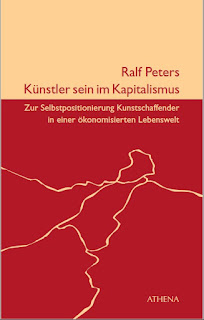
erhältlich im Buchhandel!
mehr dazu hier: http://www.athena-verlag.de/controller.php?cmd=detail&titelnummer=1015
und gerne auf Anfrage!
Donnerstag, 9. November 2017
Ding und Ware / Thing and Product
english below!
(ein Nachtrag zum letzten post)
Die Überschwemmung mit dem Tsunami an Dingen, der wir im Kapitalismus ständig ausgesetzt sind, macht einen echten Bezug zu diesen Dingen sehr schwer. Sie tauchen nur noch in ihrer Funktion als Waren auf.
Die Überschwemmung mit dem Tsunami an Dingen, der wir im Kapitalismus ständig ausgesetzt sind, macht einen echten Bezug zu diesen Dingen sehr schwer. Sie tauchen nur noch in ihrer Funktion als Waren auf.
(Rilke hat den Verlust des einstmals engen Beziehungsgeflechts zwischen
Mensch und Dingen eindringlich gespürt und zu einem großen Thema seiner Lyrik
gemacht , z.B. in den Dinggedichten.)
Im Vergleich zu früheren
Epochen werden viele Dinge unseres Alltagslebens heute in kürzester Zeit gegen
neue ausgetauscht. (Das Neue - wie wir durch Scheler wissen - ist eines der
infantilen Ideale des kapitalistischen Denkens!) Wir wechseln unsere Kleidung,
Smartphones, Computer und sogar unsere Wohnungseinrichtungen in einem Tempo, das uns selbst
atemlos zurücklässt. Damit erfüllen wir brav unsere Aufgabe als Konsumenten, in dem wir das Credo des Wachstums, koste es was
es wolle, im Spiel halten.
Auf den ersten Blick könnte es
scheinen als sei die simplify-your-life-Welle, die zur Entrümpelung des
Lebensumfeldes aufruft, eine Gegenbewegung gegen die Flut der Dinge als Ware,
die uns wegzuschwemmen droht. Doch liegt der Verdacht nahe, dass damit
eigentlich der kapitalistische Geist unterstützt wird. Und zwar in zweierlei
Hinsicht. Zum einen hat der Kapitalismus gar kein Interesse am Horten von
Dingen, weil er die alten Dinge so schnell wie möglich durch neue ersetzt sehen
will.
Außerdem befördert die Idee des entrümpelten Lebens das kapitalistische Ideal eines Menschen, der keinen Ballast mit sich schleppt, der ihn abhalten könnte, so flexibel wie möglich im kapitalistischen Spiel eingesetzt zu werden. Dinge, an denen man hängt, machen den Menschen träge.
Außerdem befördert die Idee des entrümpelten Lebens das kapitalistische Ideal eines Menschen, der keinen Ballast mit sich schleppt, der ihn abhalten könnte, so flexibel wie möglich im kapitalistischen Spiel eingesetzt zu werden. Dinge, an denen man hängt, machen den Menschen träge.
Zuguterletzt kann die
Entrümpelung des Lebens dazu führen, überhaupt keinen Gegenstand im Leben mehr
zu besitzen, zu dem man eine echte Beziehung aufbauen könnte, denn dazu braucht
es vor allem Zeit! (Ja, ich weiß: Die Entrümpelung führt im besten Fall dazu,
dass mir die Dinge, die mir am Herzen liegen könnten, überhaupt erst
auffallen.)
Künstlerinnen und Künstlern
dagegen bleibt gar nichts anderes übrig, als eine starke Beziehung zu den
Dingen aufzubauen, mit denen sie hantieren oder die sie kreieren. Im
künstlerischen Kontext (besonders in der Bildenden Kunst, der Performance Art
und im Theater) ist kein Ding eine Ware, sondern etwas, zu dem ich mich als
Künstler - und dann auch als Betrachter
- ins Verhältnis setzen muss.
Mit dem Festhalten an der Idee
der bedeutungs- und wirkungsgeladenen Dinghaftigkeit verteidigen Künstler
einen Wert, der im Kapitalismus zugunsten des bloßen Warencharakters der Dinge
zu verschwinden droht.
One could think that the simplify-your-life-movement that wants to support a clearing out of the environment of our lives is a counter movement against this flood of products that threatens us to be washed ashore. But maybe even this movement supports the capitalistic logic in two ways: First capitalism is not interested in collecting too much things because it is much better to replace them soon through new stuff. Second the idea of a cleared out life promotes the capitalistic ideal of a human being that doesn´t carry any ballast that would keep him/her from being felxible enough to continue the race inside capitalism. Things one is clinging to makes people lazy.
Finally the clearing out of one´s life can lead to a situation in which you don´t possess any things you could build up a deep relation to! (Well I know, having less things might also lead to the chance to see the things that could be important to me at all!)
Artist in any case have to build a strong relationship to the things they work with or they create. In the context of art (fine arts, performance art, theatre) a thing cannot be a mere product or article but something I - as an artist, and as an observer - have to put myself in a relation to. Staying strong with this idea of understanding things as been connected with meaning and effects on us, artists defend a value that threatens to disappear in capitalism in favor of seeing things just as products and material that can be replaced at any time.
The
flood of things that we have to face permanently in capitalism, makes
it difficult to have a real relation to these things. They appear only
as products or articles.
(Rilke has felt this loss of relation between thing and men very strongly and made it to a mein issue of this poetry.)
Compared
with earlier epochs today things of our daily lives are replaced for
new ones very fast. (The new - as we know from Scheler: one of the
infantile ideals of capitalism!) We change our clothing, smartphones,
computers and even our furnishings in a speed that leaves us breathless.
With that we fulfill our duty as consumers supporting the capitalistic
credo of permanent growth.One could think that the simplify-your-life-movement that wants to support a clearing out of the environment of our lives is a counter movement against this flood of products that threatens us to be washed ashore. But maybe even this movement supports the capitalistic logic in two ways: First capitalism is not interested in collecting too much things because it is much better to replace them soon through new stuff. Second the idea of a cleared out life promotes the capitalistic ideal of a human being that doesn´t carry any ballast that would keep him/her from being felxible enough to continue the race inside capitalism. Things one is clinging to makes people lazy.
Finally the clearing out of one´s life can lead to a situation in which you don´t possess any things you could build up a deep relation to! (Well I know, having less things might also lead to the chance to see the things that could be important to me at all!)
Artist in any case have to build a strong relationship to the things they work with or they create. In the context of art (fine arts, performance art, theatre) a thing cannot be a mere product or article but something I - as an artist, and as an observer - have to put myself in a relation to. Staying strong with this idea of understanding things as been connected with meaning and effects on us, artists defend a value that threatens to disappear in capitalism in favor of seeing things just as products and material that can be replaced at any time.
Samstag, 4. November 2017
Kapitalismus und das Grundgesetz/capitalism and constitution
english below in green
Bei der Lektüre eines Buches
des unfassbar jungen Philosophen Markus Gabriel (Ich ist nicht Gehirn, Berlin
2015) ist mir eine wichtige inhaltliche Brücke zwischen den beiden Feldern
aufgegangen, mit denen ich mich seit einiger Zeit intensiv beschäftige: dem
Kapitalismus als Lebensform und dem Grundgesetz.
In der Auseinandersetzung mit
Artikel 1 des GG („Die Würde des Menschen ist unantastbar. (...)“) bemerkt
Gabriel, das der Satz auch ganz buchstäblich verstanden werden kann. Man kann
die Menschenwürde nicht antasten, weil sie kein Ding ist. Die Würde erwächst aus bestimmten Bedingungen, die zum
Menschsein dazugehören. Die heute in der Philosophie weitgehend dominierende
Haltung des Materialismus behauptet aber, dass man alle weltlichen Phänomene
auf Dinge oder Dinghaftes zurückführen kann. Dagegen argumentiert Gabriel
vehement und wie ich finde mit gutem Recht.
Dabei zitiert er Kant, der die
Unterscheidung zwischen Preis und Wert bzw. Würde eingeführt hat. Kurz gesagt
hat für Kant alles, was Würde besitzen kann, keinen „Marktpreis“, weil es nicht
als Mittel für einen anderen Zweck verwendet werden kann. Die Würde ist Zweck
an sich. (Kant, Metaphysik der Sitten)
Was im Materialismus Ding
genannt wird, ist im Kapitalismus die Ware.
Wie wir bei Scheler schon gesehen haben (vgl. meinen Vortrag!), ist ein
Grundmerkmal des kapitalistischen Geistes der Warencharakter aller Dinge. Heute
ist die Verwandlung aller Lebensaspekte zur Ware sehr weit fortgeschritten.
Fast alles kann zur Ware degradiert und im kapitalistischen Karussell zu Geld
gemacht werden. Um aber zur Ware zu werden, muss etwas zuerst ein Ding sein. Die
Wissenschaften bzw. der philosophische Materialismus tragen zur Entwertung der
Welt bei und flankieren so die Entzauberung dieser Welt und die Verdinglichung
aller Phänomene, die in ihr auffindbar sind.
Die Menschenwürde aber ist
keine Ware. Implizit erkennt Kant bereits, dass sich bestimmte Werte und die
Menschenwürde gegen eine Vereinnahmung durch die kapitalistische Logik wehren.
Die Würde des Menschen hochzuhalten als unantastbares und unverkäufliches Recht
bedeutet demnach auch, sich vom kapitalistischen Geist zu distanzieren. Oder
umgekehrt: Die Distanzierung vom Geist des Kapitalismus als alle Lebensform
beherrschen wollender Ethos macht uns zu Verteidigern des Artikel 1 des
Grundgesetzes.
Das ist ein quasi
künstlerischer Akt, zumindest wenn man – wie ich – davon ausgeht, dass die
innere Distanzierung vom Geist des Kapitalismus überhaupt erst den Raum für
künstlerisches Agieren eröffnet. Das jedenfalls war ein Ergebnis meiner
Auseinandersetzung mit den Gedanken von Max Scheler (die man hier im Blog unter
anderem in den Vortragsvideos findet).
Reading a book of the very
young german philosopher Markus Gabriel, I noticed a link between two subjects
I am workking on since quite a while: the spirit of capitalism and the german
constitution.
Quoting the art. 1 of the
constitution that in german says „The dignity of men is not to be touched
(=unvaluable)“ Gabriel mentions that this is true in a very basic sense. You
can´t touch dignity because it is not a thing. Dignity emerges out of a set of
conditions that belong to humanity. The today very dominant philosophical idea
of materialism claims that all worldly phenomenons can be reduced to things,
i.e. a material based fundament. Gabriel argues with good reasons against this
view.
He quotes Kant and his
distinction between price (or costs) and value. Kant claims that everything
that has dignity cannot have a price (on a market) because it can´t be used as
a means for another purpose. Dignity is a purpose in itself.
What materialism calls thing is called product in capitalism. In capitalism everything has the quality of
being a product that can be sold and bought. Today the transformation of nearly
all aspects of life is developped very far. Nearly everything can be
transformed into a product and can be involved into the circus of money making.
But what should become a product has to be a thing first. Science helps to make
the world to a thing and to get rid of values.
Dignity is not a product. Kant
implicitly sees here already that certain values and dignity of men try to
resist against the dominance of capitalistic logic. To defend the dignity of
men as a right that can´t be sold means also to keep the distance to
capitalistic thinking. Or: Keeping the distance to the logic of capitalism as
the ethos that dominates our form of life means defending article 1 of the
german constitution.
This is an somewhat artistic action, at least if you think (as I do) that the space for artistic activity opens up only through the search for an inner distance to capitalistic logic. This was one of the results of my work with the ideas of Max Scheler (that you can find here in this blog and on my video lectures (partly in english).
This is an somewhat artistic action, at least if you think (as I do) that the space for artistic activity opens up only through the search for an inner distance to capitalistic logic. This was one of the results of my work with the ideas of Max Scheler (that you can find here in this blog and on my video lectures (partly in english).
Abonnieren
Posts (Atom)